ISO Certification in Abu Dhabi: What You Need to Know
Wiki Article
The Reason Uae Businesses Are Rushing To Get Iso Certified In 2026
Just walk into any procurement conversation in the UAE in the present and ISO certification will be mentioned in the first few minutes. What used to be an optional credential for larger corporations is now a normal expectation for everyone in construction, logistics, healthcare and food production technology. And the speed at which local firms are in pursuit of certification has increased quite a bit over the past few years.Government Contracts Drive Much of the demand
A large portion of the currently being pushed comes from semi-government and government tendering requirements. Many public sector contracts across the Emirates have now included an ISO certificate as a requirement prequalification document, rather than the optional element, which means that companies who do not have one are just not able to bid before price or capability even enter the debate.
International Trade Partners Expect It as a Standard
The UAE's status as an interregional trade and logistics infrastructure means a large percentage of local companies have international partners. These suppliers increasingly consider ISO certification as a fundamental confidence signal, rather than a distinction. The European or North American buyer evaluating a suppliers based in Dubai will typically shortlist in part on whether or not an acknowledged management system certificate has been issued, since it's a familiar standard to refer to regardless of their knowledge of the local market.
Free Zones Are Actively Encouraging the Certification
A few of the biggest UAE free zones are now promoting certification support as part of their business formation packages realizing that certified tenants are more likely to get better clients and grow faster. This formal encouragement, coupled and a real push for competition, has pushed certification away from being an issue of specialized considerations to something which is closer to standard business ethics.
Risk and Insurance Considerations are Being Applied to a Increasing Degree
Insurers operating in the UAE markets are more and more considering management system certification in their risk assessments, particularly for areas such as construction and manufacturing that are prone to quality and safety problems. are a significant risk to liability. A certified safety or quality management system provides insurers with an established foundation for the pricing of risk. A few are now providing more favorable conditions to qualified applicants as a result.
The Cost of Certifications Has fallen
Competition among certification bodies and consultants in the UAE has reduced the cost dramatically compared to 10 years earlier, making certification available to small and medium businesses that had thought it was only accessible to larger corporates. This shift in pricing has opened the door to more businesses seeking certification first time.
Different Standards Suit Different Businesses
The requirements for every business differ, and not all require the same certification, and understanding which standard actually applies is often the initial hurdle. A construction company's needs in safety management may differ when compared to a software organization's concerns regarding security of information, which is why the demand has increased throughout a variety standard rather than focus on just one.
What This Means for Businesses Are they still on the fence?
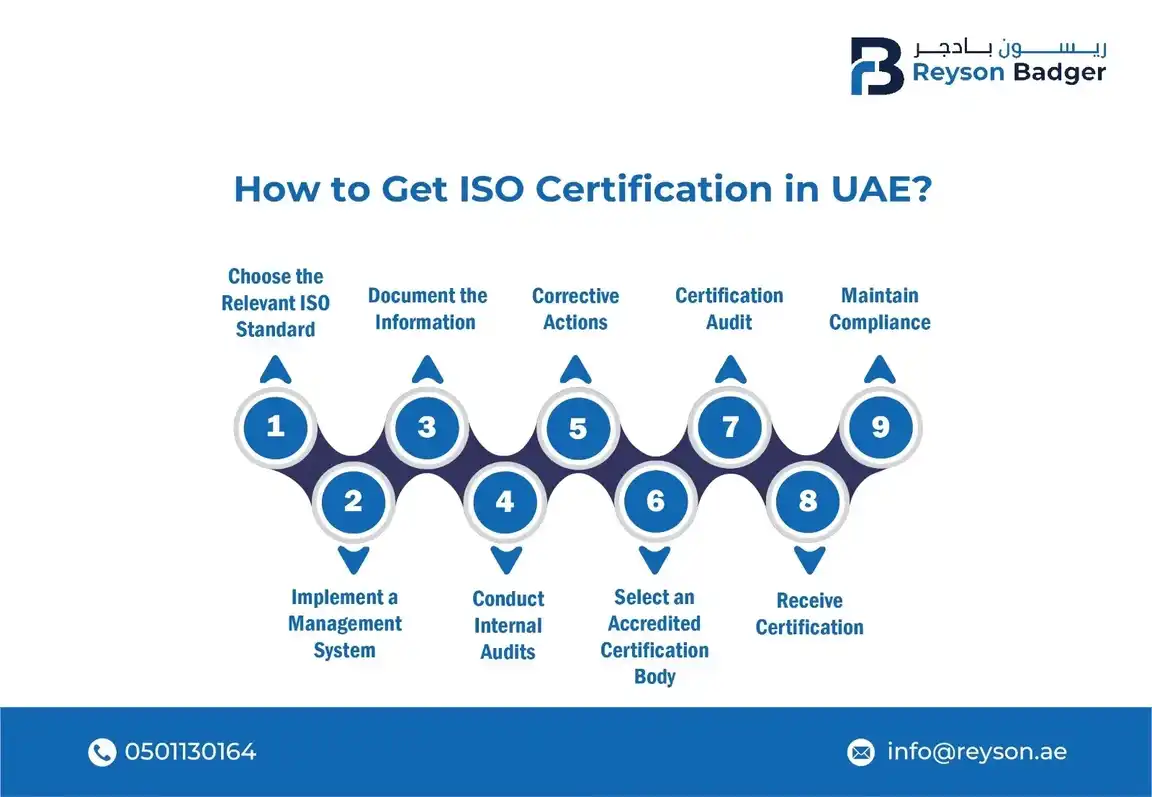
If you're a company still considering whether certification is worth the effort In reality, 2026 is that it has moved from whether rivals have it, to how many chances are missed with it. Beginning with a gap analysis against the relevant standard, and then a well-planned time frame for implementation before an external audit, and the overall process is much more straightforward than even five years ago.
The Talent Market Is Not Responding Enough
As certification has become increasingly essential to the way UAE businesses conduct their business, a genuine local talent market has developed around quality environmental, and safety and roles. There are more professionals having recognised lead auditor and Implementation qualifications than before. This has made easier for companies to employ internal employees capable of sustaining a a management system long in the aftermath of certification project ends, rather than completely relying on external consultants indefinitely.
Multinational Companies are setting the Regional Tone
Many multinationals that operate local or Middle East headquarters out of the UAE take their global accreditation requirements with them and require local suppliers and suppliers to comply with the same standards. It has had a clear negative impact, as local companies that supply to these supply chains by multinational companies frequently encounter certification requirements which cascade down from expectations set by clients, which originated out of the UAE within the country.
The increasing importance of certification is seen as a Growth Enabler, and not just Compliance
The most notable shift in the last couple of years is that more UAE businesses are now viewing certification as something that enhances growth, by opening an opportunity for tender eligibility and international partnership opportunities instead of simply an expensive compliance expense. This reframing has made the expenditure much more rational internally, as it links directly to revenue opportunities instead of being an expense that is purely part of the budget for compliance.
What can we expect in the coming years? Ahead
With the current trends given the current situation, it's reasonable believe that ISO certification to keep moving away from a competitive advantage toward an outright requirement for entry into markets across the many UAE industries over the next years. Businesses that have a head start on this change now instead of trying to wait until the requirement for certification becomes inevitable, generally discover the process is significantly more calming and the competitive position is much stronger.
How long does the entire process In the majority of cases, it takes
The entire process from initial gap assessment to the issue of a certificate typically lasts between three and nine months, dependent on the size of business, current process maturity, and the speed with which internal teams can be able to implement required modifications. Companies under a lot of pressure frequently try to shorten the timeline significantly, however hurrying the process to implement can result in a management system that struggled at the first examination, making an accurate schedule a truly worthwhile investment.
The increase in ISO certification in the UAE indicates a market is no longer treating safety and quality as an internal choice and has started to treat it as the fundamental element to doing business seriously, both locally as well as internationally. If you are a business looking to begin, the first process is a simple, authentic conversation with a certification body or a reputable expert about which standard matches current processes and customer expectation, instead of making a guess by looking at what competitors has on their websites. All of this momentum does not show any signs of slowing making the current situation a sensible one for companies still contemplating certifications to go from contemplation to decision. Follow the top ISO Certification UAE for blog info.

ISO 14001 Certification Why Iso 14001 Certification? Environmental Management Is Important For Uae Companies
Environmental concerns have evolved from something of a secondary concern to becoming an essential business concern across the UAE which is largely due to international sustainability commitments as well as by the growing regulatory and client expectations. ISO 14001, the international standard for environmental management systems has evolved into a natural choice for companies seeking to demonstrate genuine and structured environmental responsibility over good motives alone.What ISO 14001 Actually Requires
The standard requires businesses to recognize the environmental aspects of their operations, know the impact these aspects have and implement systems in place to manage and mitigate negative impacts over time. This can mean anything from reducing waste and emissions in manufacturing settings to lessening the use of energy and paper usage in a service-oriented office company, as this standard applies to the extent to which a company's environmental footprint looks like.
Alignment to UAE National Sustainability Goals
The UAE's broad national commitments concerning sustainability and net-zero goals have helped to create a true institutional momentum that supports environmental management. ISO 14001 certification gives individual businesses an opportunity to demonstrate alignment with those larger objectives. It is more important to align with firms that bid on government and semi-government tenders, where environmental credibility is now becoming an clear evaluation criterion.
Industries that are important to the industry
Construction, manufacturing, oil and gas, and logistics typically face the most direct environmental scrutiny due to the physical scale of their operations, but companies that provide services are increasingly seeking certification too, both for tender eligibility and genuine cost savings through an improved use of resources. Even companies with relatively less environmental footprint may find the method of arranging their operations uncovers unexpected efficiency possibilities.
The Legal Compliance Angle
A significant aspect of ISO 14001 involves identifying and checking compliance to applicable environmental legislation as well as regulatory requirements. This in the UAE context spans federal environmental law as well as specific regulations for the emirates. Certified companies typically have a more precise, recent understanding of their regulatory obligations than uncertified competitors, and reduce the risk of accidental non-compliance and associated penalties.
Integrating With Other Management Systems
Many UAE enterprises that are in pursuit of ISO 14001 already hold or are simultaneously pursuing ISO 9001, and the two standards have some structural characteristics that an integrated process for managing covering both is generally more efficient when compared to treating them like entirely separate projects. This integrated approach decreases duplicated documentation and audit efforts considerably to companies managing multiple certifications.
What the Certification Process Insights
As with other management systems standards Certification follows a predetermined procedure: an initial gap assessment, the implementation of required processes and documentation, and an audit of internal processes, and then a two-stage external audit conducted by an accredited certification body. In-depth surveillance audits which are usually annual, are a way to ensure that the environment management system's proper maintenance instead of being a lapse after the initial certificate has been issued.
Actual Business Benefits and Benefits to Businesses Beyond the Certificate
Beyond tender eligibility and regulatory clarification, businesses that adopt ISO 14001 properly often uncover actual cost savings as a result of an improved resource and waste management. This is in addition to the reputational benefits in a world of increasingly conscious clients and their partners. These tangible benefits are a large part reasons why the certification of environmental quality has evolved beyond a simple strict compliance requirement for a majority of UAE firms.
How to Measure What Really Matters
Implementing a well-designed ISO 14001 system focuses measurement efforts on environmental aspects that are crucial most to the specific company instead of tracking the metrics purely because they're easy to gauge. A logistics company might prioritise the consumption of fuel and the efficiency of routes and efficiency, while a manufacturing firm will be more concerned with the generation of waste and water usage, reflecting where each business's actual environmental impact will be.
The process of engaging suppliers and contractors
Many UAE businesses realize that a significant proportion of their environmental footprint is attributed to contractors and suppliers rather than their personal operations, and ISO 14001 encourages businesses to think about this wider effect of supply chains, instead of taking environmental management for granted as an internal matter. It has led some certified UAE companies to begin asking their suppliers for information on sustainable practices. This has created an ever-growing ripple effect across the local supply chain.
Security Preparedness for Emergencies is Part of the Standard
ISO 14001 requires businesses to detect potential environmental emergencies related to their activities, like chemical spills or the failure of equipment with environmental implications as well as have real-time response plans in place instead of handling such situations reactively. This component of preparedness is often revealed holes that businesses had not previously thought of, especially in relation to staff trained for emergency scenarios.
A Standard that Rewards Real and Genuine
In the end, ISO 14001 rewards businesses that consider environmental management an ongoing priority for their operations rather than an exercise in documentation completed once and forgotten. UAE companies that embed the principles of the standard into daily process of decision-making, and not merely putting the standard within an individual compliance function will reap the most positive environmental and reputational advantages in the course of time.
Water Management requires particular attention in the UAE in the UAE context
Because of the desert climate in the UAE and reliance on desalinated water managing and use, water use typically requires a special focus within the ISO 14001 system compared with areas where water scarcity is less pressing. Businesses that integrate water efficiency in their environmental management practices immediately have this among the top beneficial aspects of certification within the local situation.
For UAE companies that are weighing ISO 14001, the certification will be a direct response to actual pressure from the market and regulators and a structured opportunity to reduce environmental impact better, which increasingly affects regulators, customers, and the UAE's own plans for national sustainability as well. With environmental standards in the UAE continue to increase organizations that can build a strong environmental management capabilities now, instead of waiting for it to become an unavoidable requirement, are likely to succeed in the years to come. None of this needs to appear overwhelming for smaller enterprises as the scales of standardization are proportional, and even small actual environmental improvement initiatives implemented regularly are likely to please auditors much better than a fanciful plan that never is followed through. Consistency, and not just effort alone, is what auditors as well as genuine environmental outcomes both reward. small, gradual changes tend to outperform ambitious plans that have a tendency to stagnate after the first few months. Take a look at the top ISO Certification Dubai for site info.